
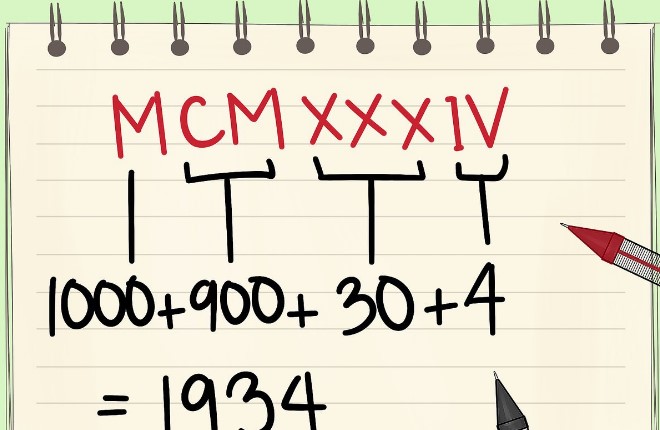
Roman numerals are a numeral system that originated in ancient Rome and were used throughout the Roman Empire. They are still used today, primarily in the context of numbering pages, chapters, movies, statues, clock faces, and buildings, among other things. They are also used in certain fields such as music and literature. Roman numerals use a combination of letters from the Latin alphabet to represent numbers. The basic symbols are I, V, X, L, C, D, and M, which represent 1, 5, 10, 50, 100, 500, and 1,000 respectively. Roman Numeral Converter is read from left to right and is added or subtracted based on their value and position in the numeral. To use Roman numerals, it is important to understand the rules for adding and subtracting the symbols and to practice converting between Roman and Arabic numerals.
How to Use Roman Numerals
To use Roman numerals, it is important to understand the basic symbols: I, V, X, L, C, D, and M, which represent 1, 5, 10, 50, 100, 500, and 1,000 respectively. Roman numerals are read from left to right and are added or subtracted based on their value and position in the numeral. For example, “IV” represents 4, “XII” represents 12, and “XIX” represents 19. It is also important to remember the rule of subtracting one numeral before one of a higher value and not repeating a numeral more than 3 times in a row. Practice converting between Roman and Arabic numerals.
When to Use Roman Numerals
Roman numerals are used primarily in the context of numbering pages, chapters, movies, statues, clock faces, and buildings, among other things. They are also used in certain fields such as music and literature. In addition, Roman numerals are often used in the names of monarchs and popes. They can also be used to number lists, outlines, or to show the sequence of events in history. Roman numerals can also be used for decorative purposes, such as on book covers, artwork, and jewelry. It’s also used in the numbering of movie sequels and in the numbering of Olympic games, Superbowls, and the like.
Summary: How Do Roman Numerals Work?
Roman numerals use letters from the Latin alphabet to represent numbers. The basic symbols are I (1), V (5), X (10), L (50), C (100), D (500), and M (1000). The value of a numeral is determined by the combination of symbols and the order in which they are written, with larger symbols preceding smaller ones and subtractions indicated by placing a smaller symbol before a larger one.
Conclusion
Roman numerals are a numeral system that originated in ancient Rome and were commonly used throughout the Roman Empire. The system uses a combination of letters from the Latin alphabet to represent numbers, with I representing 1, V representing 5, X representing 10, L representing 50, C representing 100, D representing 500, and M representing 1,000. The numerals can be combined to represent larger numbers, with the largest numeral, M, being used up to 3,999. The system is still used today in certain contexts, such as in the numbering of movie sequels and in the names of popes.

